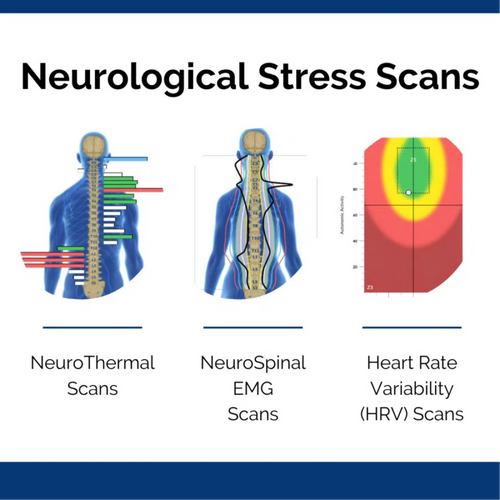
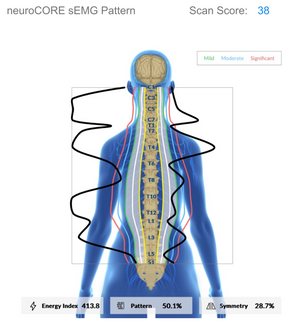
This particular scan is vital for helping our Perfect Storm patients best. It's one of the most important forms of testing we can do when conditions like Autism, Asperger's, Sensory Integration Disorders, ADHD, and Anxiety are being investigated.
That's because each of these neurodevelopmental and neurosensory challenges is rooted in stuck tension, altered tone, and exhaustion of the neuromotor system. Most people who've spent time in this world, whether that's parents of a spectrum or sensory kid or adults navigating their own diagnosis, are familiar with the word "tone," from working with PTs, OTs, and Speech Therapists, or from their own experience.
Neurological and tone challenges are a big deal, since motor function and development are tied directly to brain function and development. That means if the EMG scan detects patterns of stuck tension and imbalance, the brain is almost certainly stuck in sympathetic (fight or flight) tone and also struggling with an imbalance between its core functions of regulating emotions, behavior, learning, and memory.
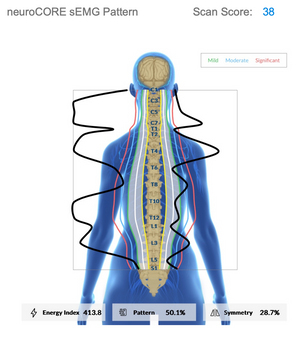
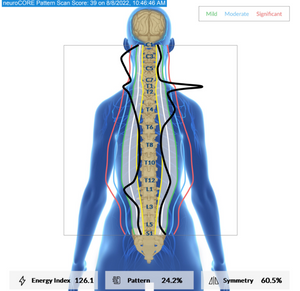
There are three common findings with EMG scans, and we'll briefly describe them here, then show examples of each type below:
- Raging Bull: this is someone whose nervous system is stuck on the "gas pedal" and entirely sympathetic dominant, leading to challenges with things like hyperactivity, impulsivity, anxiety, difficulty sleeping, and so on.
- Drunken Bull: this scan finding most often correlates with someone struggling with coordination, focus, reading comprehension, communication, and so on.
- Raging Drunken Bull: over time, it's common to end up with both scan patterns, along with the signs and symptoms of each.
One of the most exciting things about this work is that we can see changes in EMG scans fairly quickly, especially in kids, since a developing nervous system is still learning to grow and adapt at such a fast pace. But the same principle holds at any age: when subluxation gets into the neuromuscular system (as shown on EMG), it can wreak havoc and alter someone's function and development for years to come, whether that person is 5 or 55.
Diving a bit deeper into this scan, our INSiGHT EMG Scans use a 3-step scoring system that helps us really understand what's going on with that patient's neuromotor system, and therefore their overall brain and neurological function.
Here are the 3 scores you'll see on your EMG Scan, with a quick explanation of what they mean, and then we've provided some examples below:
- Total Energy Score: this score tends to go way up in someone who's wound up and stuck in sympathetic mode, so a high score here is most often seen with our "Raging Bull" cases struggling with things like anxiety, behavior, and sleep issues.
- Pattern Score: this reflects overall neurological tone, and a low score here indicates someone who's likely struggling with emotional dysregulation, focus and concentration challenges, postural exhaustion, and a weak core.
- Symmetry Score: this score measures the balance between the right and left sides of the neurospinal system, which is crucial to overall balance in brain function and coordination.